A Plant Named for What It Does
Phyllanthus niruri is called chanca piedra in Spanish, "carry-me-seed" or "gale of the wind" in the English Caribbean, "grann sirik" in Haitian Creole, and several other names across the tropics. But everywhere it grows, the name in some language refers to its most remarkable property: breaking down stones.
Kidney stones and gallstones are an enormous source of suffering — and in the Caribbean, where diets can be high in oxalates and uric acid, and where heat causes chronic mild dehydration, kidney stone rates are significant.
Chanca piedra has been used for this purpose for centuries in the Caribbean, Amazon basin, India, and across Africa. It's one of those plants where the traditional knowledge led scientists to investigate — and what they found validated everything the traditional practitioners claimed, and more.
What Makes It Work
The key compounds in chanca piedra include:
- Phyllanthin and hypophyllanthin — liver-protective, antiviral, reduce liver enzyme levels
- Geraniin — powerful antioxidant, anti-kidney stone activity, antiviral (including hepatitis B)
- Quercetin and rutin — anti-inflammatory, capillary-strengthening
- Ellagic acid — antioxidant, anti-cancer properties
- Phyllemblin — antispasmodic (relaxes smooth muscle in urinary tract)
Kidney Stones: The Most Studied Use
Several clinical trials — including randomised controlled trials in Brazil and India — have examined chanca piedra for kidney stones. Findings include:
Prevention:
- Significantly reduces urinary calcium and oxalate excretion (the building blocks of most kidney stones)
- Increases urinary magnesium (which prevents stone formation)
- Creates an environment in the urine that inhibits crystal growth
Treatment of existing stones:
- Studies show increased stone passage rates compared to control groups
- Reduces size of existing stones in some patients
- Phyllemblin relaxes the ureters (the tubes from kidney to bladder), making stone passage less painful
The mechanism is multi-directional — it doesn't just dissolve stones (though it may help with this), it changes the urinary chemistry to prevent their formation and growth, and relaxes the muscle to ease their passage.
How to use for kidney stones:
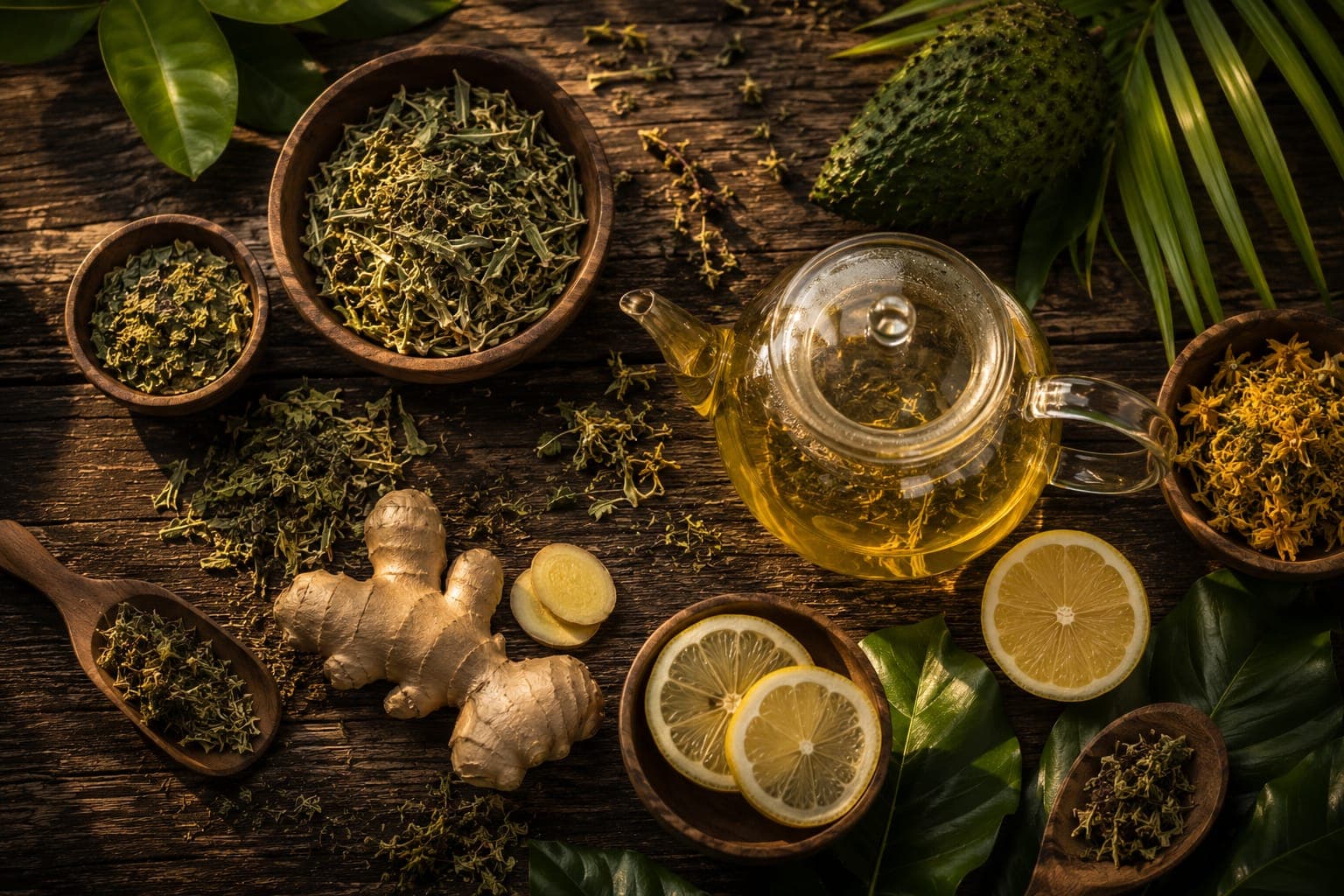
A strong daily tea (boil 1 tablespoon dried herb in 500ml water for 15 minutes), 2 cups daily for 4–12 weeks. During active stone passage: 3 cups daily with 3 litres of water. Warmth on the back helps stone passage.
Important: Large stones (>5mm) may require medical intervention. Chanca piedra is most effective for small stones and prevention. Anyone with kidney disease should use under medical supervision.
Liver Protection — The Second Major Use
Phyllanthin and hypophyllanthin have some of the strongest liver-protective effects documented in any plant. Studies show they:
- Reduce elevated liver enzymes (ALT, AST) — the markers of liver inflammation and damage
- Protect liver cells against toxic injury (including alcohol damage)
- Stimulate liver regeneration
For hepatitis B specifically, geraniin has demonstrated antiviral activity in laboratory and some clinical settings, with studies showing reduction in hepatitis B surface antigen and virus levels.
Important for hepatitis B patients: This is promising evidence, but do not stop antiviral medication without doctor guidance. Use as a complement to treatment.
For general liver support — including people who drink alcohol regularly, take multiple medications, or have fatty liver — chanca piedra as a regular tea provides meaningful hepatoprotective benefit.
Urinary Tract Infections (UTIs)
The antimicrobial compounds in chanca piedra inhibit the adhesion of bacteria (particularly E. coli) to the urinary tract lining. This is exactly how it prevents UTIs — by making it harder for bacteria to stick and colonise.
For women who suffer recurrent UTIs (very common), regular chanca piedra tea can reduce frequency significantly. It's not an antibiotic — it won't cure an active severe UTI alone — but as prevention and for mild infections, it's genuinely effective.
Blood Sugar Support
Multiple compounds in chanca piedra improve insulin sensitivity and reduce fasting blood glucose. The effect is modest compared to cerasee, but meaningful as part of a broader blood sugar management protocol.
Preparation
Standard tea:
- 1 tablespoon dried herb per cup of water
- Bring to a boil, reduce heat, simmer 10–15 minutes
- Steep covered additional 10 minutes
- Strain and drink warm or cool
Enhanced preparation for kidney stones:
- Add 1 teaspoon cornsilk (maïs stigmates) — additional diuretic
- Add 1 teaspoon dandelion root — additional kidney support
- This combination is widely used in Caribbean traditional medicine for kidney and urinary health
Growing Chanca Piedra in the Caribbean
Phyllanthus niruri grows wild throughout the Caribbean — you likely walk past it without recognising it. It's a small, low-growing annual plant with tiny leaves in two rows along the stem, and tiny fruits underneath the leaves. It often grows as a "weed" in gardens and disturbed soil.
If you recognise it in your environment, you have free medicine. Dry the whole plant (leaves and small stems) in the shade and store in a sealed container.
The Bigger Picture
Plants like chanca piedra represent something I find extraordinary about Caribbean nature: this island is a pharmacy. The plants that grow here evolved in response to the health challenges of this environment — tropical pathogens, kidney stress from heat and dehydration, liver burden from tropical diets. They work here because they belong here.
One of my goals as a Caribbean herbalist is to document these plants properly — their uses, their preparations, their appropriate cautions — so this knowledge doesn't disappear as another generation grows up disconnected from the land.
These plants were here before us, and if we respect them, they'll keep taking care of us.