The Tree in Every Caribbean Yard
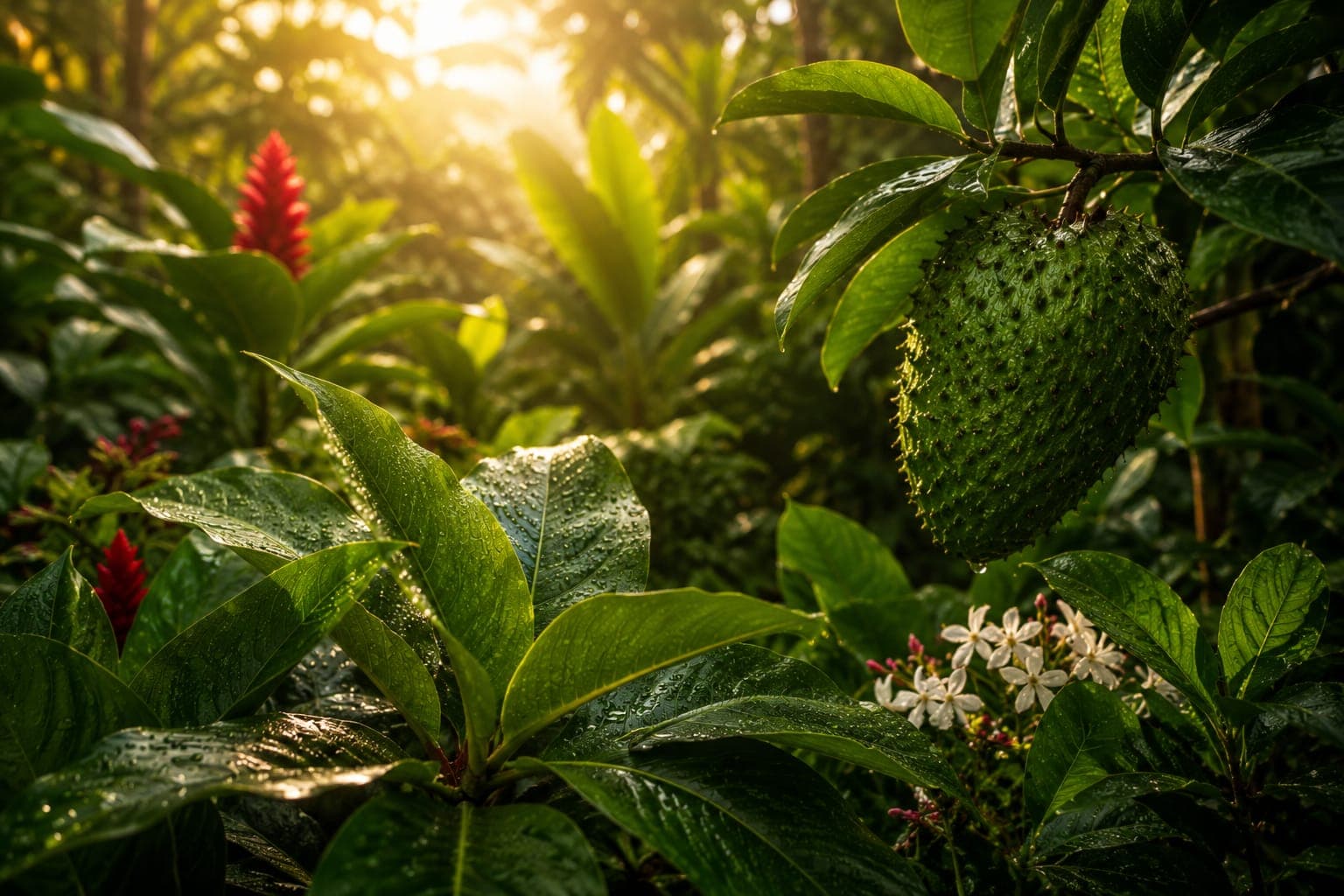
Annona muricata — soursop, corossol, guanábana — is one of the most iconic trees in the Caribbean. The spiny green fruit with its white, creamy interior is beloved. But while everyone knows the fruit, most people in the West don't realise the leaf is where the serious medicine lives.
In the Caribbean, Africa, and South America, soursop leaf tea has been a cornerstone of traditional medicine for centuries. It's used for fever, anxiety, parasites, hypertension, inflammation, and more.
In recent years, it has attracted significant scientific attention — partly because of claims about anti-cancer properties. I'll address those honestly, because there's both real science and significant exaggeration in circulation.
The Active Compounds
Soursop leaves contain a remarkable range of bioactive compounds:
- Acetogenins (annonacins) — the most studied compounds, with demonstrated activity against multiple cancer cell lines in laboratory settings
- Alkaloids (reticuline, coreximine) — antidepressant, muscle-relaxant, sedative
- Flavonoids (quercetin, kaempferol) — anti-inflammatory, antioxidant, antiviral
- Tannins — antimicrobial, astringent
- Annonaceous acetogenins — antiparasitic, antifungal
Documented Therapeutic Uses
Immune system support and antiparasitic effects
This is the most well-established use. Soursop leaf has documented activity against multiple internal parasites including:
- Leishmania species
- Herpes simplex virus
- Multiple bacteria including Staphylococcus and Streptococcus
For people living in tropical climates where parasite exposure is higher, regular soursop leaf tea provides meaningful protective and treatment benefit.
How: 3–5 fresh or dried leaves in boiling water, simmer 10 minutes, steep covered 20 minutes. Drink 1 cup daily as maintenance, 2 cups during active illness.
Anxiety, stress, and sleep
The alkaloids in soursop leaf — particularly reticuline — have demonstrated significant anxiolytic (anti-anxiety) and sedative effects. In laboratory studies, they compare favourably with diazepam (Valium) in reducing anxiety markers.
In practice: a cup of soursop leaf tea in the evening produces a calm, relaxed state without the cognitive dulling of pharmaceutical sedatives. Many Caribbean people drink it nightly for sleep. The effect is real and consistent.
How: 2 leaves in hot water, steep 15 minutes, drink 1 hour before bed. Do not drive after use.
Hypertension
Multiple studies have shown that soursop leaf extracts can lower blood pressure by relaxing smooth muscle in blood vessel walls and mildly reducing heart rate. The mechanism is different from pharmaceutical antihypertensives — it works as a calcium channel modulator.
Important: Never stop blood pressure medication without your doctor's guidance. Use soursop leaf as a complementary support alongside medical supervision.
Fever and infection
Soursop leaf is diaphoretic (promotes fever-reducing sweating) and directly antimicrobial. For tropical fevers — including dengue — it has been used in Caribbean and South American traditional medicine. Some studies suggest it may reduce dengue fever duration, though this requires more clinical evidence.
Anti-inflammatory effects
Quercetin and kaempferol — the main flavonoids in soursop leaf — are potent anti-inflammatory agents. For chronic inflammatory conditions including arthritis, these compounds provide meaningful relief over weeks to months of consistent use.
The Cancer Question: Honest Answers
This is where I need to be careful and honest with you.
What the science actually shows:
Laboratory studies (in vitro — in a petri dish, not in humans) have shown that annonacins can kill certain cancer cell lines, sometimes very effectively. This is real. Multiple studies, multiple researchers, multiple cancer types.
What the science does NOT show:
There are no completed clinical trials demonstrating that soursop leaf tea cures or treats cancer in humans. The leap from "kills cancer cells in a petri dish" to "cures cancer" is enormous, and many compounds that work in lab settings don't work the same way in the human body.
Additionally, high doses of annonacins have been linked in some epidemiological studies to an atypical form of Parkinson's disease. This is a real concern at very high consumption levels (drinking liters daily for years).
My honest recommendation:
Soursop leaf is a valuable medicinal herb for immune support, anxiety, hypertension, and parasites. Use it at reasonable amounts (1–2 cups daily). Do not use it as a replacement for cancer treatment. Do not drink excessive amounts long-term.
If someone you love has cancer, soursop leaf tea can be a supportive complement to treatment — but please maintain medical care.
Growing and Harvesting
If you're in the Caribbean and don't have a soursop tree, plant one. It grows quickly in our climate and the fruit alone is worth it. Pick mature, dark green leaves (not new growth). Dry them in the shade to preserve active compounds — never in direct sun.
Traditional Preparation in the Caribbean
Morning immunity tea: 3 leaves + a piece of ginger + a cinnamon stick, simmered 15 minutes. Add honey and key lime. This is the daily maintenance drink used by many elderly Caribbean people who maintain remarkable health well into their 80s and 90s.
There's wisdom in that simplicity. These plants grew here for a reason.